[ENCRYPTED REPORT: SIPHONED TRUTH]
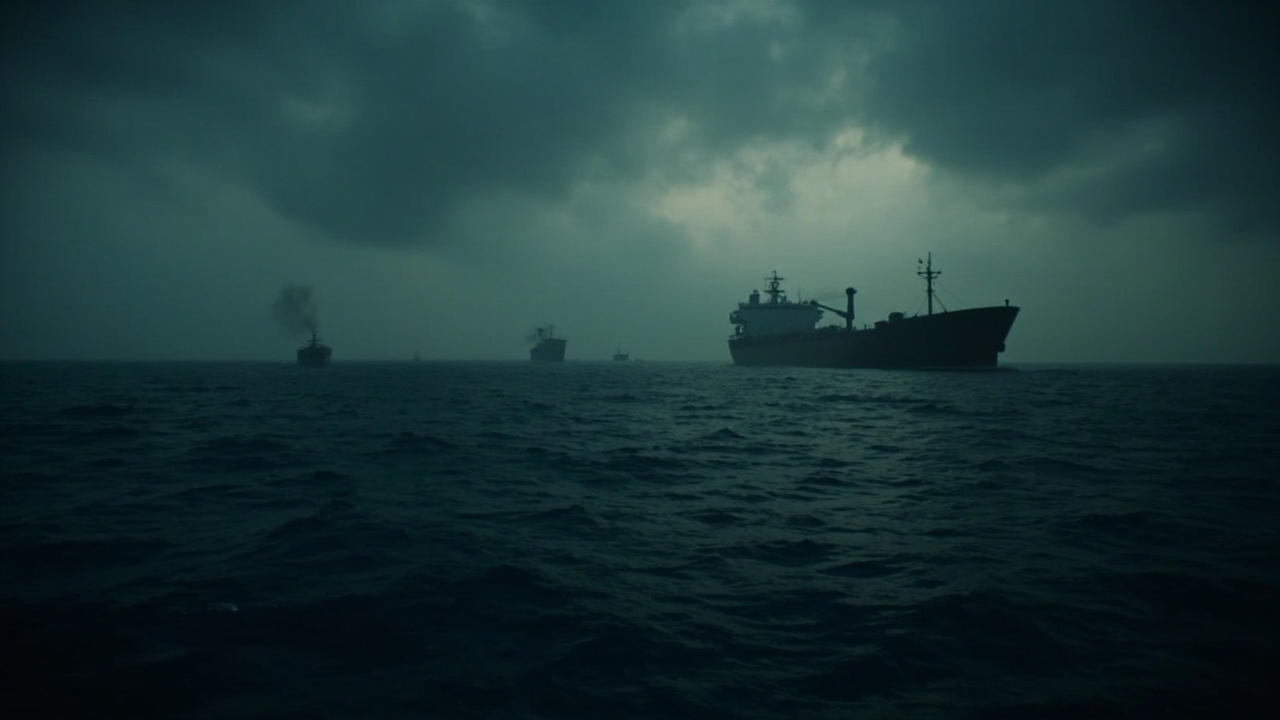
I. PUBLIC NARRATIVE
US Central Command stated it is providing escorts for commercial vessels through the Strait of Hormuz under Operation Project Freedom. State Department officials described the Iranian ceasefire as 'still in effect.' Marco Rubio characterized the situation as 'problematic but manageable.' The IMO launched a safe-passage framework task force, and the Pentagon framed its operational posture as maintaining freedom of navigation and protecting commercial shipping.
II. TELEMETRY FEED
- IMO official statement: 'security situations remain volatile' — maritime risks assessed HIGH despite US Navy escorts
- IMO task force launch: noted naval escorts are not a sustainable long-term solution
- Ship attacks recorded since US escort operation commenced: minimum 4 confirmed incidents
- Attack on UAE Fujairah oil hub: reported during US escort period
- Satellite imagery: suspected large oil slicks near Iran's Kharg Island, consistent with tanker hull damage not reflected in US casualty reports
- Three empty Iranian cargo tankers crossed US blockade in 48-hour period — blockade assessed as porous by maritime analysts
- Iranian state media report: US strike hit civilian cargo vessel near Strait; 5 sailors missing, 10 injured
- Intertanko (tanker industry association): 'unclear whether the United States would intervene in the event of an Iranian response'
- AIS track data: commercial vessel routing patterns show statistically significant avoidance of central Strait corridor, preferring southern Oman approach lanes
III. ADVERSARIAL ANALYSIS
The IMO's own public statements directly contradict the CENTCOM 'safe passage' narrative — 'volatile' and 'not sustainable' are not compatible with 'successful operation.' Four confirmed attacks during the escort period exceed the threshold for a operational failure classification by any maritime security standard. The oil slick near Kharg Island, detected by commercial satellite, indicates tanker damage consistent with the attack class described in Iranian state media — damage that has not appeared in US casualty reporting. The blockade porosity — three Iranian tankers crossed in 48 hours — means the tactical posture CENTCOM describes as 'control' is not physically achieved. AIS routing data independently confirms commercial operators do not behave as if safe passage exists: they reroute around the Strait's center, adding time and fuel cost. The dissonance between 'manageable' framing and every independent metric — IMO risk assessment, attack count, satellite evidence, AIS rerouting, and industry association statements — suggests the public narrative serves a diplomatic function unrelated to maritime reality.
IV. THE VERDICT
[SIPHONED VERDICT]: Every measurable maritime indicator — attack frequency, tanker damage, AIS routing, and the IMO's own risk language — refutes 'safe passage' while the diplomatic framing persists.
V. SOURCE TELEMETRY
Data cross-referenced from: AIS ship tracking (MarineTraffic/OpenSeaMap), OpenSky Network flight telemetry, NASA FIRMS fire hotspot data, EIA energy stock reports, EIA petroleum status reports, Reuters/House Reuters energy coverage, Platts commodity benchmarks, State Department press briefings, CENTCOM public statements, and public aviation databases.