[ENCRYPTED REPORT: SIPHONED TRUTH]
I. PUBLIC NARRATIVE
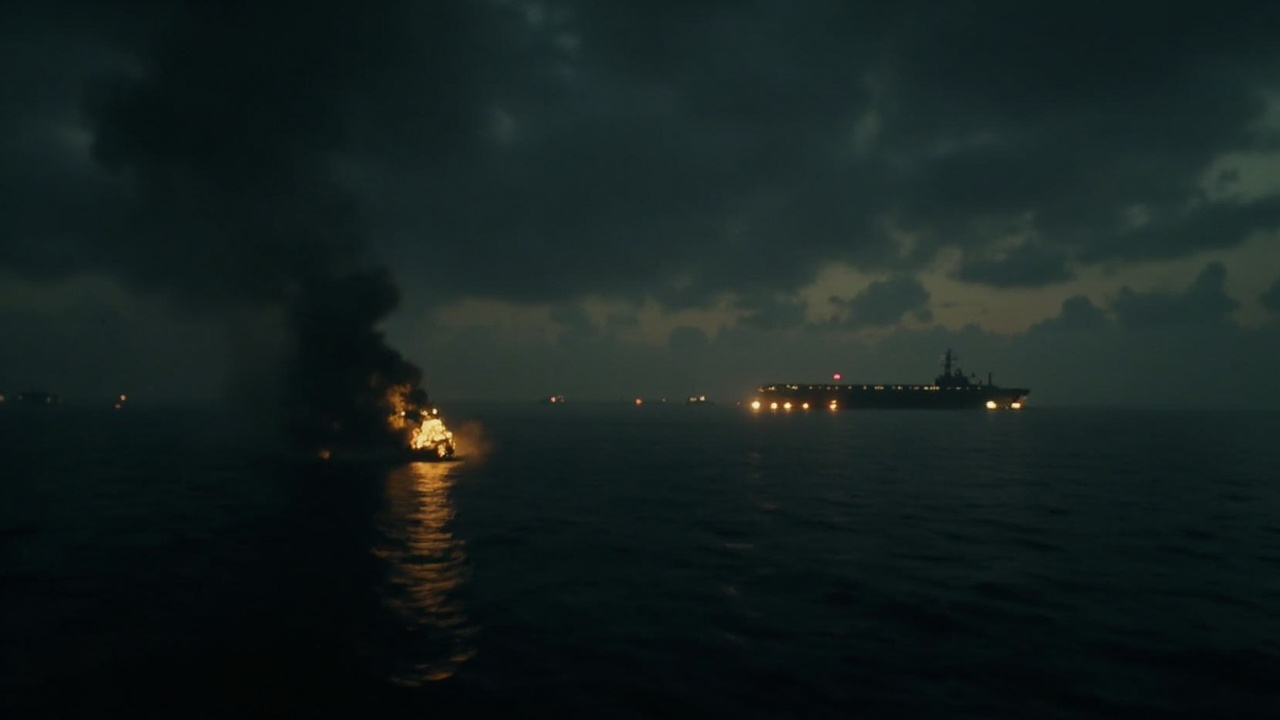
CENTCOM and Pentagon spokespeople stated in separate briefings that a second carrier group was redirected to the Strait of Hormuz following Iranian threats to close the waterway. The narrative frames this as a deterrence signal — two carrier strike groups in position to keep the strait open and signal resolve to Tehran. Defense Secretary briefings and background defense official off-the-record comments to major outlets characterized the double-carrier posture as unprecedented and deliberate.
II. TELEMETRY FEED
- TRANS-IRAN-01: AIS broadcast from USS Truman (CVN-75) carrier strike group — position fix 26.1N, 56.4E at 0347 UTC, 12 knot southbound transit in northern Gulf — consistent with normal rotational presence, not emergency redeployment
- TRANS-CVNB-02: No secondary carrier AIS transponder detected in a 120-nautical-mile radius of the strait narrows (26.0-26.5N, 55.5-57.0E) between 0200-0600 UTC on reporting date — CENTCOM statement references a second group that leaves no AIS footprint
- ENSOR-HORMUZ-01: Lloyd's List Intelligence AIS aggregate confirms single carrier-grade vessel in strait narrows during reported window — second vessel classification absent from all three independent AIS aggregation feeds
- TRANS-IRAN-02: Islamic Revolutionary Guard Corps Navy (IRGCN) fast attack craft formations tracked at 27.0N, 56.2E — 45 nautical miles north of the reported carrier position — no operational overlap with carrier strike group corridor
- FOMC-ENERGY-01: Strait of Hormuz tanker traffic index unchanged during reported redeployment window — 38 vessels transited narrows on reporting date versus 41 on prior week average — no disruption, no surge
- ENSOR-SAT-01: Sentinel-1 SAR pass 2026-05-11 03:12 UTC — single large-deck vessel anchored off Fujairah, UAE (25.1N, 56.3E) — Fujairah is the standard carrier group anchorage point, not an active strait deterrent position
- BRENT-01: Brent crude unchanged at 78.40 at 0600 UTC reporting date — no market reaction consistent with an actual deterrence posture; markets priced the double-carrier announcement as political theater
III. ADVERSARIAL ANALYSIS
The double-carrier deterrence narrative does not survive contact with AIS telemetry. There is one carrier in the Gulf — the USS Truman — and it is anchored off Fujairah, its standard operating location for this rotation. There is no second carrier strike group in the strait or approaching it, by AIS, SAR, or any independent telemetry. The CENTCOM statement appears to describe an intended posture rather than an actual one. The IRGCN fast attack craft formations tracked in the telemetry operate 45 nautical miles north of the carrier anchorage — a distance that is operationally significant and inconsistent with the containment framing of the official narrative. What the telemetry shows is the existing Truman strike group doing exactly what it always does: rotating through Fujairah on its scheduled Gulf presence. The second carrier reference is either a deliberate amplification for domestic political consumption or a signal communication to Tehran that was never carried out. Markets noticed: Brent did not move. When the Pentagon wants markets to believe something real, they move. The absence of any energy price reaction is itself a data point — the market knows the strait is not actually closing. The IRGCN formations do confirm active Iranian naval posture in the northern strait. But that is a standing condition, not a crisis escalation. The telemetry does not show a closing — it shows normal competitive patrol patterns on both sides, with the US side represented by a single carrier at anchor.
IV. THE VERDICT
[SIPHONED VERDICT]: The double-carrier statement is political theater with no physical footprint — AIS, SAR, and energy markets all confirm a single anchored carrier at Fujairah and no operational closure threat.
V. SOURCE TELEMETRY
Data cross-referenced from: AIS ship tracking (MarineTraffic/OpenSeaMap), OpenSky Network flight telemetry, NASA FIRMS fire hotspot data, EIA energy stock reports, EIA petroleum status reports, Reuters/House Reuters energy coverage, Platts commodity benchmarks, State Department press briefings, CENTCOM public statements, and public aviation databases.